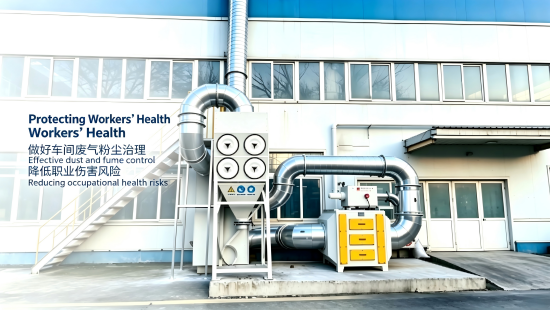
Managers tend to believe occupational injuries only stem from sudden accidents such as mechanical collisions and falls from heights, while overlooking invisible dust and waste gas in workshops.
Chronic health damage caused by long‑term exposure to dust and toxic pollutants also constitutes major occupational health hazards. Many injuries build up over time, and most occupational diseases are irreversible once developed. Workplace safety is not merely about preventing acute work‑related injuries; it also means safeguarding the long‑term physical health of front‑line workers. Production processes including spraying, grinding, welding and cutting continuously generate paint mist, dust and VOC‑containing organic waste gas. As hazardous substances disperse throughout workshop air, personal protective equipment such as face masks cannot provide complete protection against such hazards. Implementing waste gas and dust control at the source to improve workshop working conditions is a key measure for enterprises to fulfill their main responsibilities for occupational health.
Invisible Workshop Hazards Deserve Greater Vigilance
Workshop dust and waste gas inflict hidden harm. Adverse effects are hardly noticeable in the short term, yet risks accumulate with prolonged work exposure:
⚠️ Long‑term inhalation of process dust from grinding and welding damages the respiratory system and may trigger irreversible pneumoconiosis‑related occupational diseases.
⚠️ VOC‑based organic waste gas released during painting and coating irritates the respiratory tract and mucous membranes continuously, and may cause chronic damage to the nervous system after prolonged exposure.
⚠️ Uncontrolled accumulated dust endangers workers’ health and may trigger dust explosion hazards, threatening plant‑wide workplace safety.
💡 Masks and respirators serve only as the final passive line of defense. Engineering controls represent the primary active safeguard.
Pollutants shall be collected via equipment enclosure and centrally purified to lower workshop pollutant concentrations at source, so as to fundamentally reduce occupational injury risks.
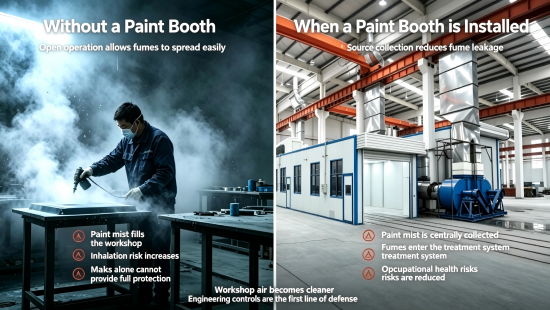
Strengthening Workshop Protection to Safeguard Workers’ Health from the Source
Effective occupational health protection in workshops requires multi‑dimensional collaboration of source control, equipment support and management systems, rather than relying on a single solution.
🔧 Source Control | Mitigate Unorganized Emissions
Install enclosures for pollutant‑generating workstations such as painting, grinding and welding to contain dust and waste gas within confined spaces and prevent pollutants from spreading across the whole workshop.
⚙️ Proper Equipment Selection | Achieve Effective Purification of Waste Gas and Dust
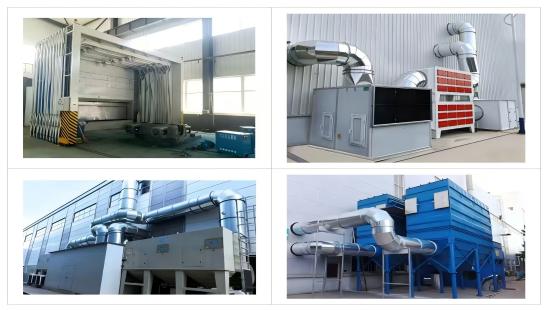
Select suitable paint booths, dust collectors and waste‑gas purification systems according to actual plant operating conditions to collect and treat paint mist, dust and VOC waste gas, so as to improve workshop working conditions while ensuring compliance with environmental discharge standards.
🛠️ Ongoing Operation & Maintenance | Sustain Equipment Performance
Environmental protection equipment does not deliver permanent performance upon installation. Conduct regular inspections, consumable replacement and pipeline checks to prevent equipment malfunction and avoid idle, ineffective treatment facilities.
📋 Institutional Safeguards | Multi‑layered Protection
Carry out post‑specific safety training, arrange regular occupational health physical examinations for employees, and standardize the use of personal protective gear. Combine equipment‑based treatment with human‑oriented management to fully secure occupational safety.
💡 Environmental governance is never just about passing official inspections.
A clean and safe production workshop complies with mandatory regulatory requirements, embodies genuine care for front‑line workers, and underpins enterprises’ long‑term stable development.
Closing Remarks
Every finished product owes its existence to the hard‑working front‑line workforce.
To prevent occupational harm and protect workers’ health, enterprises must keep workplace safety high on the agenda and never neglect improvements to workshop air quality. Professional environmental governance solutions build robust barriers against dust and toxic agents, so that every hard‑working employee can go to work safely and return home in good health.


 Address: No. 560-A,Luyuan South Street,Tongzhou District,Beijing,China
 Tel: 15810231938
 Email: Ifzthb@163.com